cookies to track usage and preferences."
data-cookieaccepttext="I UNDERSTAND"
data-cookiedeclinetext="Disable Cookies"
data-cookiepolicytext="Privacy Policy">
OPINION: A neuroscientist says that he’s particularly worried about kids, who may have spent much of last year learning online. Some easy hacks can help.
Paleogenomic research has expanded rapidly over the past two decades, igniting heated debate about handling remains. Who gives consent for study participants long gone — and who should speak for them today?
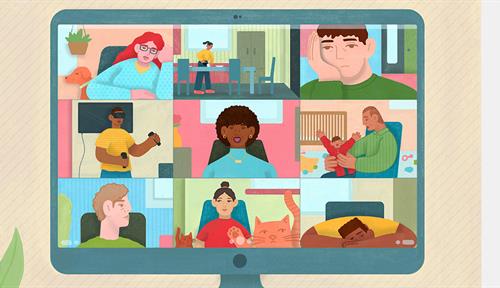
The pandemic has immersed us faster and deeper in immersive communication technologies. It’s a disrupted, confusing, sometimes exhausting world — but shifting both the tech and our expectations might make it a better one.
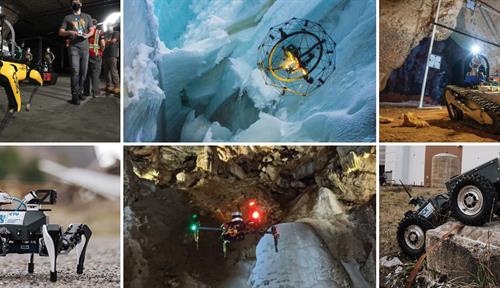
Deploying a motley crew of robots that can roll, walk and fly is a smart strategy for search-and-rescue operations — and so is trusting the machines to make decisions on the ground
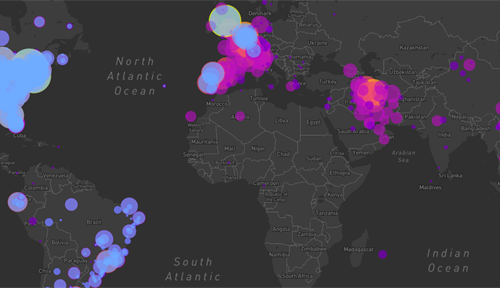
Social media posts and online searches may offer vital clues about the spread of influenza — and now Covid-19. But they also risk errors and threaten privacy.
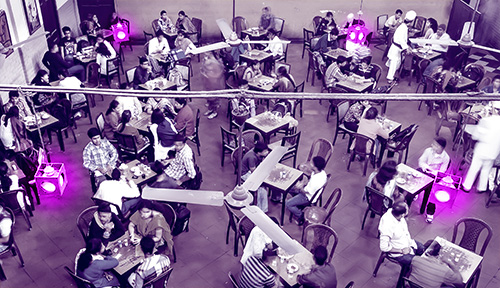
Some wavelengths of light in a range called far-UVC kill microbes in experiments and appear to be harmless to people. Could they be used to make indoor spaces safer against the coronavirus?
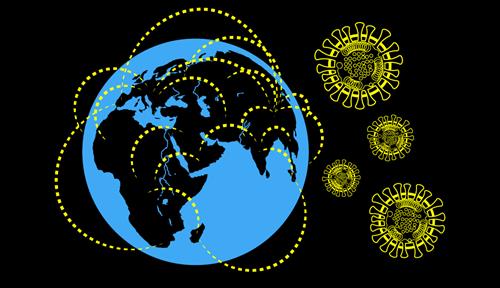
Traffic planners, securities traders and military strategists all use it. Simulating the behavior of millions of idiosyncratic individuals also may be the best way to understand complex phenomena like pandemics.
Covid-19 has been a stress test for the world’s food supply chains — and a preview of looming threats. That’s making efforts to improve the journey from farm to fork more urgent than ever.
Close X
This is not a paywall.
Knowable Magazine is free to read. But just because our articles are free to read doesn’t mean they are free to produce. If you value our trustworthy science journalism, please support it with a donation.